Theatre Life
From One Person to a Troupe: Stepping into Director "Kuozi"'s Theatre Life
1Before We Walked In
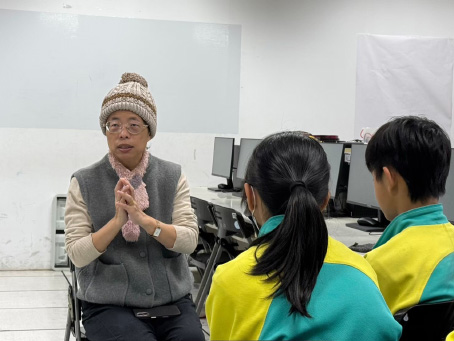
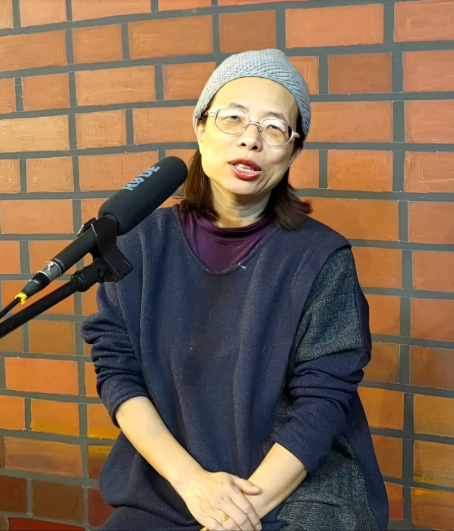
Before the interviews, our idea of a theatre troupe was simple: rehearsals, the stage, applause, and the final curtain call. But after we interviewed Director "Kuozi" several times—and carefully reviewed our notes each time—we began to understand something deeper: the light we see on stage is built on long, quiet work that happens offstage.
She told us that in the early days, she almost single-handedly held everything together, both on stage and behind the scenes: writing proposals to secure funding, managing administration, marketing and ticket sales, providing rehearsal space, acting and directing, teaching and writing scripts. Even sound and lighting, props, photography, meals, and transportation often fell on her shoulders. For her, it was not just "being busy"—it was that without those unseen tasks, the troupe simply could not keep going.
2The Hardest Five Years
Kuozi recalled that the first five years were the most difficult. Performance opportunities were limited, resources were tight, and the troupe often focused on school outreach and project-based engagements. They kept working, but it was hard to gain broader public visibility.
What made it even harder was instability within the team. At a time when members were not yet firmly settled, the troupe faced being "poached"—people were taken away, and rehearsal resources were used for others' commercial performances. It felt as if the foundation they had built was pushed back to the starting point.
Yet she shared a line that stayed with us: people can be taken, and resources can be lost, but no one can take away what you've built in your mind—your creativity, skills, and the work you create. It was a kind of resilience shaped by reality: not complaining, but deepening your craft and steadying your path.
3The Moment They Were Seen
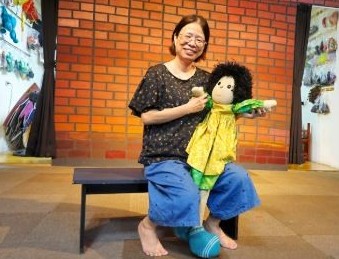
A turning point came from one simple decision: to actively seek opportunities. Kuozi applied to perform in three outreach public shows arranged through a cultural institution. All three were packed—one in Lukang drew over a thousand people—and the performances gained media coverage. For the first time, the troupe felt clearly seen by the local community.
More importantly, these shows brought more than temporary excitement; they brought people. Some audience members reached out afterward and chose to join. The team gradually shifted from "having helpers" to "welcoming committed, capable theatre practitioners." Kuozi also shared that her husband later joined and became a key support, and what had once been a one-person struggle finally started to feel like a shared journey.
4From Positioning to a New Name
Kuozi explained that the troupe had worked for years toward being recognized as an Outstanding Performing Arts Group in Changhua County, but they were rejected more than once. The judges' feedback was direct: if you mainly perform in schools and project settings, what is your artistic positioning and professional identity?
That question forced the team to think again: Who are we performing for? They decided to establish a clear identity first as a children's theatre troupe—because children often bring their families into the theatre, making it easier to build a stable audience base. With that positioning, the troupe was finally selected and awarded, and they earned the opportunity to perform at the Yuanlin Performing Arts Hall, stepping into a more complete theatre ecosystem.
After the troupe became more stable, Kuozi said that as their work accumulated and their audience grew, they hoped to serve a wider range of ages—not only children, but people of all generations. For that reason, the troupe later officially adopted the name "Pingpengcao Theatre Troupe." It was more than a name change; it was a statement of direction: starting with children, but not only for children.
5Entering the Theatre System
After the name change, the troupe entered a new stage of development: moving from building reputation to producing fully realized theatre works. Performing in a formal venue is not just an "upgrade of space"—it is a complete test of quality standards, division of labor, and production costs.
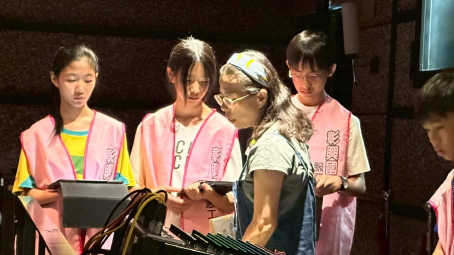
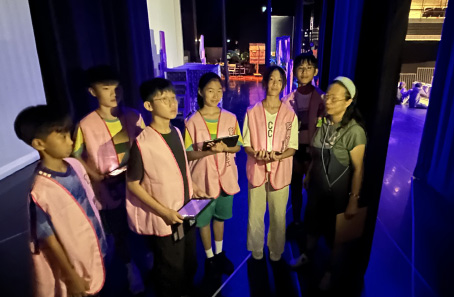
Kuozi explained that theatre venues come with comprehensive equipment and higher expectations, which quickly raise production budgets. A show that once cost around NT$50,000 could grow to NT$100,000, several hundred thousand, or even reach the million level. When a performance shifts from "being able to stage it" to "having to deliver it precisely," the work expands to include professional lighting, sound, stage crew, costumes and makeup, front-of-house guidance, and audience services. As a result, the troupe needed stronger arts administration and clearer workflows so that creation and operations could move forward together—rather than letting daily logistics drain the team's creative energy.
6How a Troupe Survives
When it comes to sustainability, Kuozi was straightforward: sometimes you earn, sometimes you lose. And losses often happen not because the troupe is not working hard, but because audiences do not buy tickets. As costs increase, without stable audiences and a reliable income structure, it becomes difficult for a troupe to operate long-term.
That is why the troupe later relied on multiple sources of support—government grants, ticket revenue, commercial performances, and collaborative projects. Kuozi also compared this with traditional opera, which has often survived through temple performances. Her point was clear: artistic ideals and financial reality are not a simple either–or choice. They require long-term practice in finding balance.
7What "Rooting in a Place" Really Means
After the interviews, we repeatedly organized and refined our notes, and slowly pieced together what "rooting in a place" truly means. It is not a slogan, and it is not simply performing more shows. It is about someone being willing to complete the invisible work: administration, resource coordination, talent development, audience cultivation, positioning, and building systems that can last. None of it looks glamorous, but each step accumulates.
Walking into Kuozi's theatre life, we saw more than the story of a troupe. We saw how local culture can be supported—step by step—through steady, grounded work. Theatre takes root in a community because someone chooses to do the things that few people see, but everything depends on.