Community Theatre
Through a cultural drama program, Captain Kuo guided us to create a community theatre performance. To truly understand the idea of "starting from the local community and telling stories for the community," we worked in groups and explored the area around our school. We visited well-known local shops, went to nursing homes and rehabilitation centers, and interviewed the community director to collect the community's memories and voices.
During the interview, the director shared stories from more than twenty years ago, when our school was first established. We realized that the school was not built overnight. It was the result of long-term planning by former principals and support from many people in the community. Because of this teamwork, today's campus and surrounding area have become so convenient and well-developed. More importantly, the school also brought real changes to the community. As the school worked hard and gained a good reputation, more houses and new buildings appeared nearby. The neighborhood became more prosperous, and housing prices kept rising.
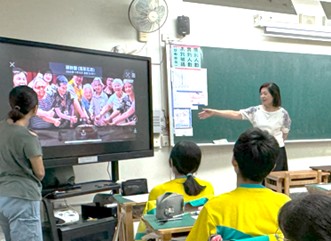
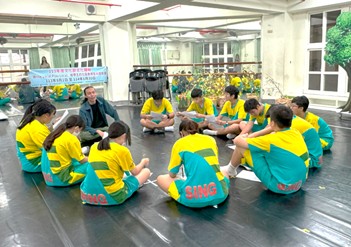
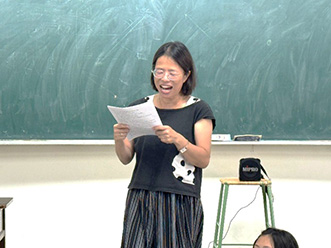
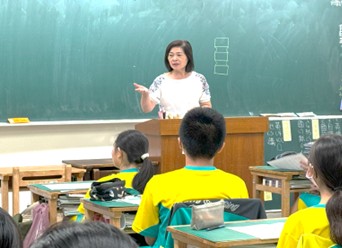
After learning all this, we decided to turn the school's founding story into a short play so that more students could understand this history. However, it was not easy for us. First, we had only limited experience with drama, mostly from a few performing arts classes and the troupe's visits, so we worried that our performance might not be clear enough for others to follow. Second, we did not have much time or budget, so we could not build large sets or prepare fancy props. Captain Kuo encouraged us by saying that community theatre does not depend on a glamorous stage. What matters most is a clear story, real emotions, and a smart use of performance elements. Her words gave us confidence and a clearer direction.
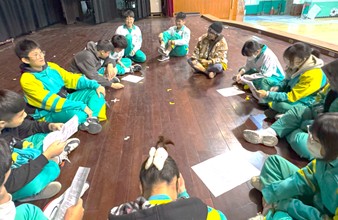
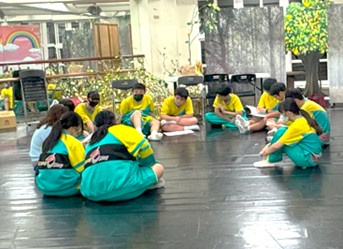
Next, we divided the work. One group wrote the script, while the other designed a "simple but imaginative" stage using easy materials we already had, such as blocks and small toys. As everyone stepped into their roles and added ideas, the script gradually took shape. The creative stage made with small objects also made the story more visual and fun. After we finished the first draft, we began rehearsing.
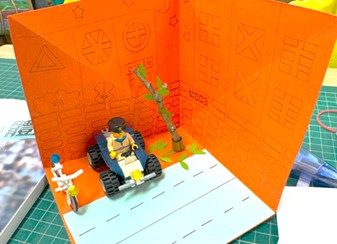
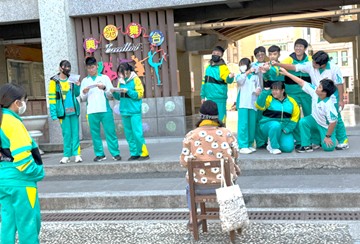
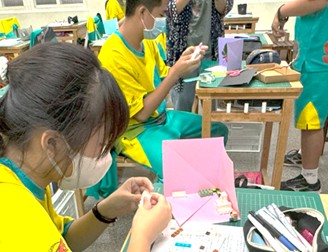
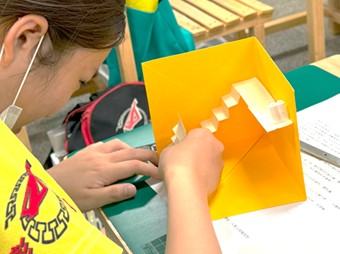
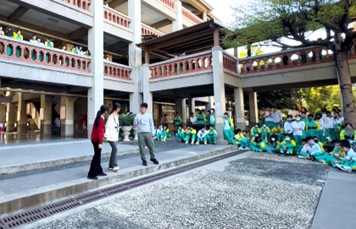
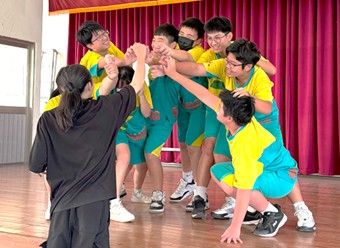
Since we planned a 15-minute flash performance on campus, we wanted all students to watch comfortably. We also had to consider the limits of the school's speakers and sound system. Everything needed to be as simple as possible, but still exciting and dramatic. At the beginning of rehearsal, we read the script to understand each scene and line. Under the director's guidance, we spent several classes turning important school locations into body movements and stage positions. Through teamwork, we learned how to "act out" the space, the characters, and the emotions.
On the day of the performance, we stood ready beside the stage and waited for the class bell to ring. Because we went on stage as a team, we felt less nervous. After the show, our classmates' feedback surprised us and made us fall in love with the feeling of being on stage.
This community theatre project was more than just a drama class. It was like a bridge connecting the school and the community, the past and the present. Through theatre, we helped others see how our school began and understand how the community and the school have supported each other. Looking back in this way was meaningful—and also truly enjoyable.